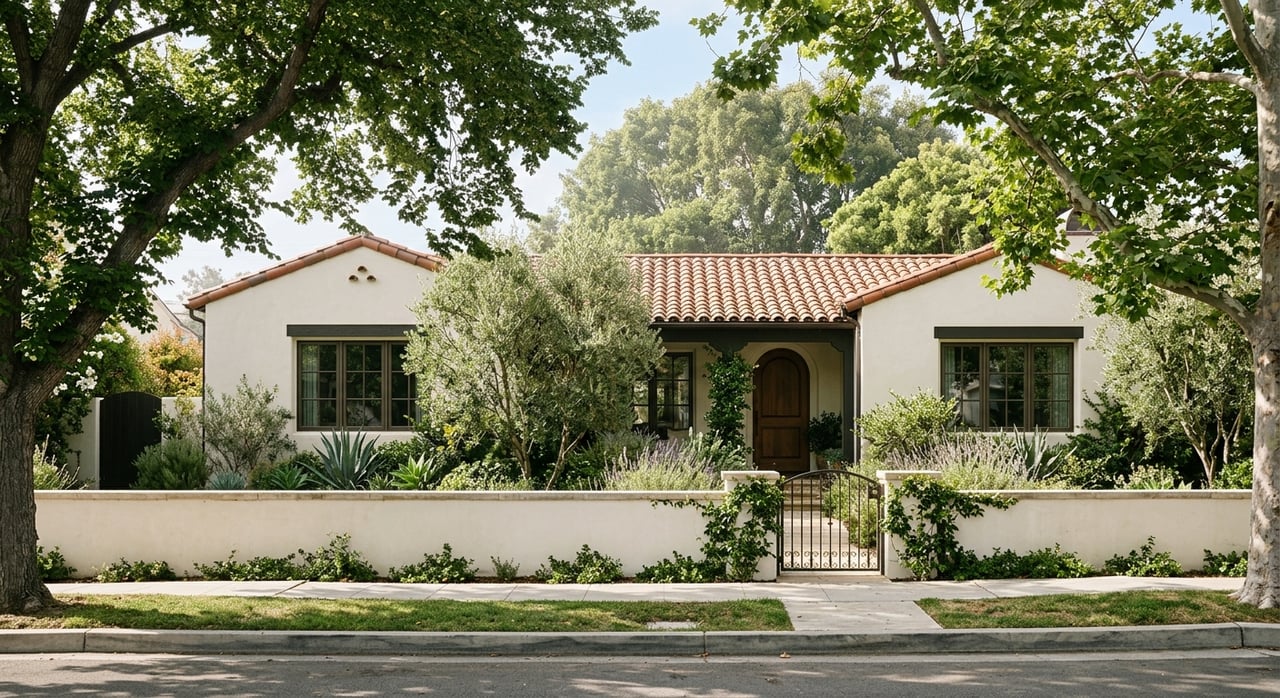
If you are weighing Brentwood against other Westside neighborhoods, the real question is not just price. It is how you want your day-to-day life to feel, how much space you want, and what kind of access matters most to you. Brentwood often lands in the middle of these conversations because it offers a more residential setting than some nearby areas while still keeping you close to the broader Westside. Let’s take a clear look at how Brentwood compares to Santa Monica, Westwood, and Beverly Hills.
Brentwood at a Glance
Brentwood occupies a useful middle position on the Westside. In March 2026, its median sale price was $2.25 million, with homes averaging 90 days on market, according to Redfin’s Brentwood housing market data. That places it above Santa Monica and Westwood on price, but well below Beverly Hills.
That middle-ground role is part of Brentwood’s appeal. You get access to major Westside corridors and amenities without stepping fully into the denser coastal feel of Santa Monica, the village-style urban core of Westwood, or the trophy pricing of Beverly Hills.
Price Comparison Across the Westside
If you are comparing neighborhoods by budget first, the differences are meaningful. Based on March 2026 figures from Redfin, Santa Monica had a median sale price of $1,564,500, Westwood came in at $1.8 million, Brentwood was $2.25 million, and Beverly Hills reached $9 million.
That means Brentwood is expensive by any normal standard, but it is not priced like Beverly Hills. For many buyers, that makes Brentwood a serious option when they want a high-value Westside location without entering the ultra-luxury tier.
| Neighborhood | Median Sale Price | Year-Over-Year Change | Avg. Days on Market |
|---|---|---|---|
| Brentwood | $2.25M | -26.9% | 90 |
| Santa Monica | $1.5645M | -16.6% | 52 |
| Westwood | $1.8M | +12.5% | 76 |
| Beverly Hills | $9.0M | +29.4% | 117 |
The pace of the market matters too. Brentwood is moving slower than Santa Monica and Westwood, but faster than Beverly Hills, based on the same market snapshot source. If you are buying, that may mean a little more room for negotiation than in a faster-moving submarket. If you are selling, it points to the value of careful pricing and patient strategy.
Brentwood Feels More Residential
One of Brentwood’s biggest distinctions is its housing pattern. City planning materials describe it as primarily a high-end single-family residential area, with commercial activity concentrated along Wilshire, San Vicente, and Sunset Boulevards, as noted in Los Angeles planning materials. In practical terms, Brentwood tends to feel more house-centric than the other neighborhoods in this comparison.
That matters if you are looking for a quieter daily rhythm and more separation between residential streets and commercial corridors. Brentwood is not isolated, but it does not read as a dense mixed-use district either.
Santa Monica Is More Urban and Coastal
Santa Monica offers a very different land-use pattern. The city has focused on adding housing in mixed-use and non-residential zones, and its downtown, promenade, and pier areas function as major public destinations, according to the City of Santa Monica.
Its housing stock also skews more heavily toward apartments and condos. For buyers who want a more urban coastal experience with strong public activity, Santa Monica may feel more connected and compact. For buyers who prefer a more residential street pattern, Brentwood often feels calmer.
Westwood Has a Strong Village Identity
Westwood also differs from Brentwood in a major way. The Westwood Community Plan area includes layered specific plans and a more visibly mixed-use pattern, especially around Westwood Village. UCLA and city planning sources describe Westwood Village as a planned shopping district, and the opening of Broxton Plaza added a 14,000-square-foot car-free commercial stretch.
The result is a neighborhood with a more urban village feel. If you want walkable commercial frontage, apartments or condos, and a strong neighborhood core, Westwood may stand out. If you want a more house-oriented setting, Brentwood generally leans more in that direction.
Beverly Hills Is More Formal and More Expensive
Beverly Hills stands apart on both pricing and structure. The city uses distinct zoning frameworks for single-family and multi-family areas, with regulation playing a major role in how different parts of the city function, according to Beverly Hills zoning information.
In everyday terms, Beverly Hills often feels more formal and more brand-driven as a luxury market. Brentwood still offers a high-end Westside address, but usually with a more relaxed residential identity and at a much lower median price point.
Commute and Mobility Differences
If your routine depends on commuting, Brentwood compares differently from its peers. Brentwood’s official neighborhood profile highlights Wilshire, San Vicente, and Sunset Boulevards as key corridors, and planning materials place its eastern boundary at the 405 Freeway. Redfin currently gives Brentwood a 52 Walk Score, 42 Transit Score, and 42 Bike Score, which points to a neighborhood that still leans more car-first than the others in this group.
That does not mean Brentwood lacks access. It means your daily movement may rely more on driving than it would in Santa Monica, Westwood, or parts of Beverly Hills.
Santa Monica Leads for Transit and Bikes
Among these four areas, Santa Monica is the strongest option for rail and bicycle access. Metro’s E Line service to Downtown Santa Monica has been in place since 2016, and Redfin gives the city an 83 Walk Score, 60 Transit Score, and 88 Bike Score.
If being able to move around without a car matters a lot to you, Santa Monica has a clear advantage in this comparison. Brentwood can still work well for many buyers, but the mobility profile is not the same.
Westwood Is Becoming More Rail-Connected
Westwood is already stronger than Brentwood on walkability and transit, with a 69 Walk Score, 66 Transit Score, and 55 Bike Score on Redfin. It is also in the middle of a major change, with Metro’s D Line extension set to add Westwood/UCLA and Westwood/VA Hospital stations in fall 2027.
That future rail access could make Westwood even more appealing for buyers who want a neighborhood with stronger transit options. Compared with Westwood, Brentwood remains more car-oriented today.
Beverly Hills Is Also Improving Rail Access
Beverly Hills is seeing similar transit momentum nearby through the D Line extension. Metro says Section 1 opens May 8, 2026 with stations at Wilshire/La Brea, Wilshire/Fairfax, and Wilshire/La Cienega, and the ride from Union Station to Wilshire/La Cienega is expected to take about 20 minutes with no transfers.
Current Redfin scores put Beverly Hills at 75 Walk, 55 Transit, and 52 Bike, again stronger than Brentwood on non-car mobility. If transit access is central to your decision, Brentwood may not be the first Westside neighborhood you compare favorably.
Brentwood’s Lifestyle Positioning
The best way to think about Brentwood may be this: it sits between Santa Monica’s coastal urbanism and Beverly Hills’ luxury prestige, with a more residential day-to-day feel and pricing that is expensive, but not trophy-level. That conclusion is supported by the market data, planning framework, and mobility profile across the neighborhoods in this comparison.
Brentwood’s official neighborhood page points to local touchpoints like the farmer’s market, the Brentwood Village Chamber of Commerce, the trails above Mandeville Canyon, and the coral tree median on San Vicente Boulevard, as highlighted on the City Council District 11 Brentwood page. Those details help explain why Brentwood often appeals to buyers who want Westside convenience with a more residential rhythm.
By contrast, Santa Monica is tied closely to the Pier and Third Street Promenade. Westwood is shaped by Westwood Village, Broxton Plaza, and upcoming rail expansion. Beverly Hills is known for destination retail, dining, and a more formal luxury identity. None of these is better in the abstract. They simply serve different priorities.
Which Westside Neighborhood Fits You Best?
If you are trying to narrow your search, it helps to match the neighborhood to your actual lifestyle rather than just the listing photos.
Brentwood may be the right fit if you want:
- A more residential setting
- Strong access to the broader Westside
- A housing pattern that leans more toward single-family homes
- High-end pricing without Beverly Hills-level entry points
- A quieter feel than Santa Monica or Westwood
Santa Monica may be a better fit if you want:
- Stronger walkability and bike access
- Rail service and a more urban coastal environment
- A denser mix of condos, apartments, and mixed-use areas
Westwood may be a better fit if you want:
- A village-style neighborhood core
- Better transit access today and more rail access ahead
- A more mixed-use, urban feel
Beverly Hills may be a better fit if you want:
- A more formal luxury-market identity
- A much higher-end price tier
- A neighborhood shaped by distinct zoning and prestige-driven appeal
Why the Comparison Matters
Choosing between Westside neighborhoods is rarely just about cost per square foot. It is about how you want to live, how you want to move through the city, and how each area fits your long-term plan. Brentwood stands out because it gives many buyers a middle path: residential, well-located, and clearly upscale, but not as dense as Santa Monica or Westwood and not as rarefied as Beverly Hills.
If you want help comparing Brentwood with Westwood, Santa Monica, Beverly Hills, or another Los Angeles neighborhood, Jeffrey Sachs offers strategic guidance grounded in experience, negotiation, and clear market analysis.
FAQs
How does Brentwood compare in price to other Westside neighborhoods?
- Brentwood’s median sale price was $2.25 million in March 2026, which placed it above Santa Monica at $1,564,500 and Westwood at $1.8 million, but far below Beverly Hills at $9 million.
How does Brentwood compare in housing style to Santa Monica and Westwood?
- Brentwood is generally more single-family and residential in feel, while Santa Monica and Westwood have stronger mixed-use patterns and a larger presence of apartments and condos.
How does Brentwood compare for commuting on the Westside?
- Brentwood is more car-oriented than Santa Monica, Westwood, and Beverly Hills, with a 52 Walk Score, 42 Transit Score, and 42 Bike Score on Redfin.
How does Brentwood compare to Beverly Hills for luxury buyers?
- Brentwood offers an upscale Westside option, but Beverly Hills sits in a much higher price tier and has a more formal luxury-market identity.
How does Brentwood compare in lifestyle to other Westside neighborhoods?
- Brentwood tends to feel quieter and more residential, while Santa Monica feels more coastal and urban, Westwood feels more village-like and mixed-use, and Beverly Hills feels more formal and prestige-driven.