Curious why Hancock Park and Windsor Square feel so different from many other Los Angeles neighborhoods, even when they sit just blocks from a lively commercial street? The answer is in the architecture, the lot planning, and the way these historic districts were designed to be experienced from the street. If you are buying, selling, or simply trying to understand what gives this part of Los Angeles its lasting appeal, a close look at its built character can help you see the area more clearly. Let’s dive in.
Why this area stands out
Hancock Park, Windsor Square, and nearby Larchmont developed mainly from the 1910s through the 1930s. According to SurveyLA, this part of the Wilshire Community Plan Area is defined by notable residential architecture, large historic preservation overlay zones, and the neighborhood-scale commercial strip along Larchmont Boulevard.
That combination matters because you are not just looking at individual homes here. You are looking at a broader design story that includes setbacks, street trees, sidewalks, lot widths, and the relationship between quiet residential streets and a walkable village center.
Hancock Park architecture at a glance
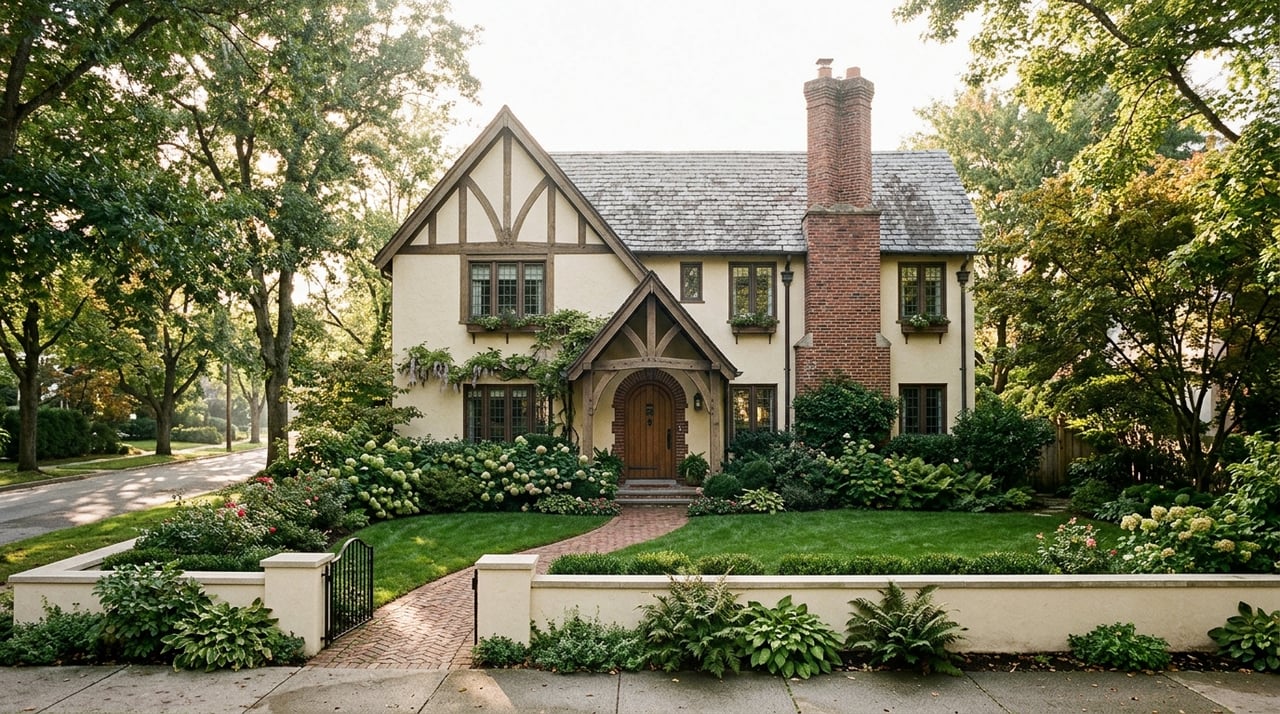
Hancock Park is known for substantial two-story single-family homes in a range of period-revival styles. City Planning identifies Tudor Revival, English Revival, Spanish Colonial Revival, Mediterranean Revival, Monterey Revival, and American Colonial Revival as especially prominent, with other styles such as French Eclectic, Art Deco or Moderne, Minimal Traditional, and Mission Revival also present within the district.
What ties the neighborhood together is not one single style. It is the consistent sense of scale, formality, and landscape design. Many homes sit on spacious lots with raised front yards, broad facades, brick or concrete entry steps, side driveways, and mature trees that shape the streetscape.
The Hancock Park streetscape
One of the most recognizable features of Hancock Park is its deep setback pattern. G. Allan Hancock reportedly pushed for roughly 50-foot setbacks, and that decision still shapes the neighborhood’s visual rhythm today.
When you walk or drive through the area, the houses do not crowd the street. Instead, you see lawns, planted slopes, and mature parkway trees, often sycamores or elms, that create a composed, almost park-like setting.
What buyers usually notice first
If you are touring homes in Hancock Park, the first impression is often architectural presence. Rooflines, front entries, windows, and ornamental details tend to read clearly from the street because the houses were designed to be seen within a landscaped foreground.
You may also notice features such as porte cocheres leading toward rear garages. That layout reinforces the early planning logic of the neighborhood and helps explain why so many blocks feel visually coherent even when the homes vary in style.
Windsor Square character and layout
Windsor Square has its own identity, even though it shares a preservation-minded, historic-residential feel with Hancock Park. It was laid out earlier, in 1911, and the area was envisioned as an exceptionally exclusive subdivision with very large lots.
City materials describe Windsor Square as a neighborhood where early homes included Craftsman and Beaux Arts or Classical Revival designs, followed by Spanish Colonial, Mediterranean, Tudor, English, French, and American Colonial Revival houses. Some Contemporary and California Ranch examples also appear in the district.
Why Windsor Square feels more estate-like
The planning of Windsor Square is a major part of its appeal. The neighborhood was designed with large frontages, significant spacing between homes, landscaped parkways, and a street pattern that does not always read like a simple urban grid.
In some parts of the district, houses are set back about 40 feet from the street with roughly 25 feet between homes. That extra lateral space, together with mature trees and surviving historic pavement in some sections, gives parts of Windsor Square a distinctly estate-like feel.
Streets, trees, and original planning details
Windsor Square was also notable for early infrastructure choices. The area was the first in Los Angeles to place power lines underground, and the development included concrete streets, sidewalks, and ornamental electroliers.
Those details may sound small, but they shape how the neighborhood feels. Mature sycamore, birch, elm, and in some areas palm-lined parkways add another layer of visual identity, helping each block feel intentional rather than accidental.
Larchmont Village changes the pace
Just nearby, Larchmont Village offers a very different type of architectural experience. Developed as a streetcar-era commercial center beginning around 1920, it was built to serve the surrounding residential tracts and remains closely tied to that original neighborhood-serving role.
A 2023 city historic-resource report notes that much of the district was built between 1921 and 1928. The original business area was connected to the Los Angeles Railway streetcar system, which helps explain why the boulevard still reads as a pedestrian-oriented village rather than a typical auto-focused corridor.
Why Larchmont feels different
In Hancock Park and Windsor Square, the visual story is about setbacks, gardens, and large homes. On Larchmont Boulevard, the visual rhythm shifts to storefronts built at the sidewalk, pedestrian-facing facades, and smaller-scale commercial architecture.
The city’s General Plan Framework specifically uses Larchmont Boulevard as an example of a successful pedestrian district. For you as a buyer or seller, that helps explain why the area offers both quiet residential streets and a neighborhood center that supports walkable daily routines.
Preservation shapes the experience
Both Hancock Park and Windsor Square are designated HPOZs, or Historic Preservation Overlay Zones. That means exterior work in these districts is reviewed for compatibility with the neighborhood’s historic character.
This is one of the most important practical points for buyers and sellers. In these neighborhoods, value is tied not only to the house itself, but also to the visual integrity of the block and the district as a whole.
What HPOZ review can mean for owners
City guidance for Hancock Park and Windsor Square focuses on compatibility, especially for street-visible facades, larger additions, infill, and other exterior changes that could affect the historic setting. In simple terms, if you plan to remodel, the design conversation starts earlier here than it might in a non-overlay area.
That does not mean change is impossible. It means windows, rooflines, front-yard changes, and visible additions should be approached with care and a clear understanding of the district context.
What to look for on a home tour
If you want to read these neighborhoods like an informed buyer, focus on a few visual cues:
- Roof pitch and roof shape
- Window rhythm and placement
- Front entry treatment
- Porch or porte cochere placement
- Front-yard slope and landscaping
- The distance between the house and the street
- The spacing between neighboring homes
In Hancock Park, these details often support a grand revival-house composition with deep setbacks. In Windsor Square, the same details tend to feel even more expansive because of lot width and separation. In Larchmont Village, the emphasis shifts from residential massing to pedestrian storefront scale.
What sellers should understand
If you are selling in Hancock Park or Windsor Square, buyers are often responding to more than square footage and finishes. They are also noticing lot placement, streetscape continuity, landscaping, and whether exterior updates feel consistent with the home and the district.
That is why presentation matters in a slightly different way here. A thoughtful strategy should account for architectural character, preservation context, and the features that make the property feel connected to the neighborhood’s broader identity.
The housing mix in the broader area
Within Hancock Park and Windsor Square, you should expect mostly large single-family homes, often historic and frequently two stories. In the surrounding Wilshire area, the housing mix becomes more varied, with apartment resources and more urban forms appearing along edges and corridors such as Rossmore Avenue and Larchmont Boulevard.
That contrast is part of what makes the area compelling. You have residential districts that feel formal and established, paired with nearby streets that are more mixed in use and scale.
Why architectural context matters in your decision
For buyers, understanding architecture and neighborhood planning can help you decide whether a home truly fits your goals. A house in Hancock Park may offer revival-style presence and a formal landscape setting, while one in Windsor Square may appeal more for its larger lot pattern and estate-like spacing.
For sellers, that same context can shape pricing, positioning, and marketing. When a neighborhood is known for character and continuity, the most effective representation usually starts with a careful reading of what makes the property and its setting distinctive.
If you are weighing a move in Hancock Park or Windsor Square, a calm, informed strategy can make the process much clearer. To discuss buying, selling, leasing, or valuing property in this part of Los Angeles, schedule a consultation with Jeffrey Sachs.
FAQs
What architectural styles are common in Hancock Park?
- Hancock Park is known for period-revival homes, especially Tudor Revival, English Revival, Spanish Colonial Revival, Mediterranean Revival, Monterey Revival, and American Colonial Revival, along with some French Eclectic, Art Deco or Moderne, Minimal Traditional, and Mission Revival examples.
What makes Windsor Square feel different from Hancock Park?
- Windsor Square generally feels more estate-like because of its large lot planning, wider spacing between homes, mature landscaped parkways, and irregular or curving street patterns in parts of the district.
What is Larchmont Village in relation to Hancock Park and Windsor Square?
- Larchmont Village is the nearby neighborhood commercial center, developed as a streetcar-era district with pedestrian-oriented storefronts that serve the surrounding residential neighborhoods.
What does HPOZ mean for Hancock Park and Windsor Square homeowners?
- HPOZ means these districts have local historic preservation review for exterior changes, especially work that affects street-visible facades, additions, infill, and other features tied to neighborhood character.
What should buyers notice when touring homes in Hancock Park or Windsor Square?
- Buyers should pay attention to rooflines, window patterns, entry design, lot setbacks, spacing between homes, landscaping, and how the house relates to the street and surrounding block.
What kinds of homes are most common in Hancock Park and Windsor Square?
- The most common properties are large single-family homes, often historic and often two stories, with more mixed-use and apartment-style buildings appearing along nearby corridors in the broader Wilshire area.